Biological H₂S Removal from Biogas
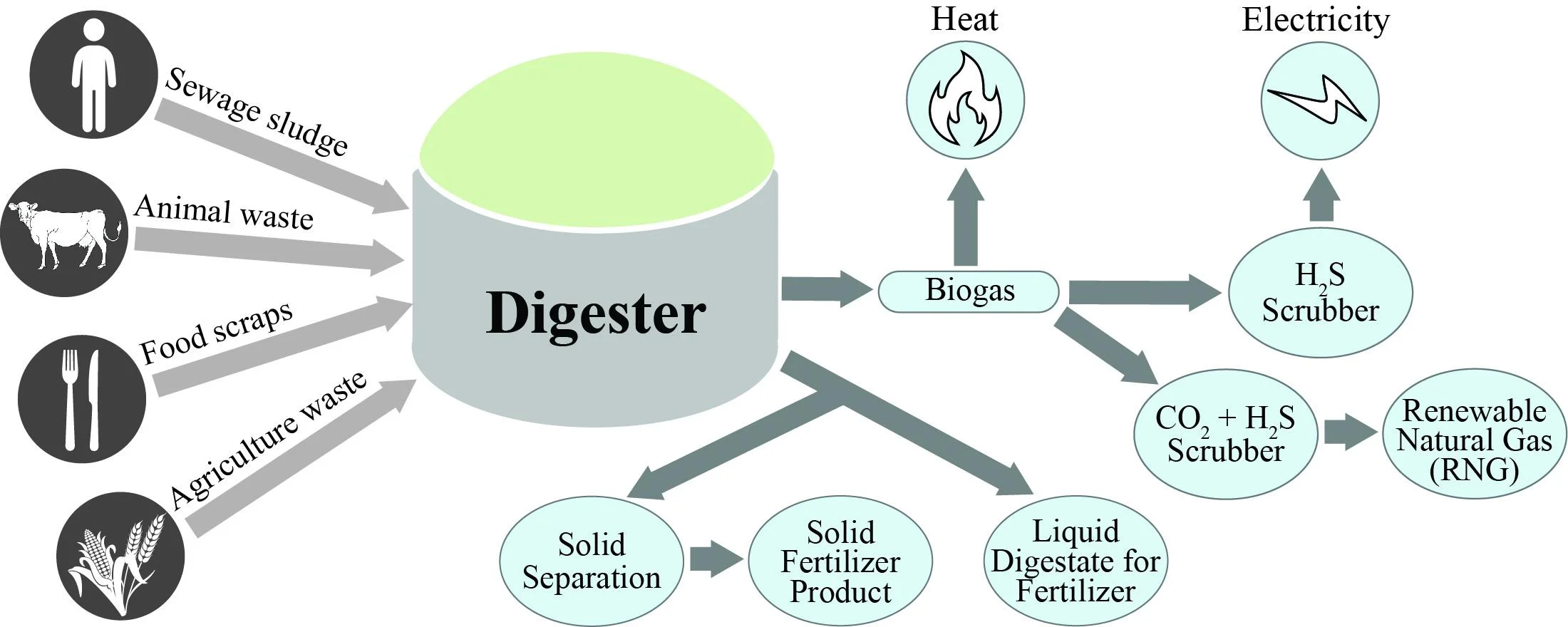
- Hydrogen sulfide is produced during anaerobic digestion by sulfate-reducing bacteria. Before upgrading biogas to Bio-CNG, H₂S should typically be reduced to below 5–10 ppm to protect compressors, membranes, and CNG cylinders as seen for Bio-CNG Production and Renewable Energy Solution
- If you mean H₂S (hydrogen sulfide) removal from biogas/Bio-CNG using biological methods under mesophilic and thermophilic conditions, here’s an overview.
Best H₂S Removal Technologies
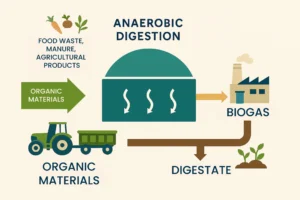
- For commercial Bio-CNG plants (≥500 Nm³/h), the most economical and reliable solution is:
-
- Ferric chloride dosing or controlled micro-aeration to reduce H₂S formation inside the digester.
- Biological desulfurization (biotrickling filter or bioscrubber) as the primary H₂S removal stage due to its low operating cost and high efficiency.
- Iron oxide media as the polishing stage to consistently achieve <5 ppm H₂S.
- Impregnated activated carbon only when ultra-low H₂S levels (<1 ppm) are required to protect sensitive equipment such as membrane systems or to meet very stringent gas quality specifications.
- This hybrid configuration offers the lowest life-cycle cost, minimal methane loss, high reliability, and excellent protection for downstream Bio-CNG upgrading and compression equipment.
| Technology | Working Principle | H₂S Removal Efficiency | Typical Outlet H₂S | Suitable H₂S Inlet (ppm) | Methane Loss | Best Application |
|---|---|---|---|---|---|---|
| Ferric Chloride (FeCl₃) Dosing | Iron reacts with sulfide inside digester | 30–70% | 500–3000 ppm | 500–8000 | None | Source reduction in digester |
| Micro-aeration (Air/O₂ Injection) | Sulfur-oxidizing bacteria convert H₂S to elemental sulfur | 50–90% | 100–1000 ppm | 500–5000 | Very Low | Primary H₂S reduction |
| Biological Desulfurization (Biotrickling Filter/Bioscrubber) | Thiobacillus bacteria oxidize H₂S | 95–99% | 20–100 ppm | 500–20,000 | Negligible | Medium to large Bio-CNG plants |
| Iron Oxide Media (Iron Sponge) | H₂S reacts with Fe₂O₃ | 99–99.9% | <5 ppm | 100–5000 | None | Polishing stage |
| Activated Carbon (Impregnated) | Adsorption and catalytic oxidation | >99.9% | <1 ppm | <2000 | None | Final polishing |
| NaOH Chemical Scrubber | Chemical absorption in caustic solution | 95–99% | 20–100 ppm | 1000–20,000 | Low | High-H₂S industrial biogas |
| Water Scrubber | Physical absorption | 20–40% | High | Low | Moderate | Not recommended for H₂S removal alone |
| Membrane Separation | Gas permeation | Poor | High | Very Low | Moderate | Requires pretreatment |
Capital and Operating Cost Comparison
| Technology | CAPEX | OPEX | Maintenance | Media/Chemical Replacement | Overall Cost |
|---|---|---|---|---|---|
| Ferric Chloride Dosing | Low | Low | Low | Moderate | ★★☆☆☆ |
| Micro-aeration | Very Low | Very Low | Low | None | ★☆☆☆☆ |
| Biological Desulfurization | Medium | Very Low | Low | Minimal nutrients | ★★☆☆☆ |
| Iron Oxide | Low | Medium | Medium | Periodic media replacement | ★★★☆☆ |
| Activated Carbon | Medium | High | Medium | Frequent replacement | ★★★★☆ |
| NaOH Scrubber | Medium | High | High | Continuous chemical use | ★★★★★ |
| Water Scrubber | High | Medium | Medium | No adsorbent | ★★★★☆ |
| Membrane | Very High | High | High | Membrane replacement | ★★★★★ |
Recommended Technology by Plant Capacity
| Bio-CNG Plant Capacity | Recommended H₂S Removal Technology |
|---|---|
| <100 Nm³/h | Ferric chloride + Iron oxide |
| 100–500 Nm³/h | Micro-aeration + Iron oxide |
| 500–1000 Nm³/h | Biological desulfurization + Iron oxide |
| 1000–3000 Nm³/h | Biological desulfurization + Iron oxide + Activated carbon |
| >3000 Nm³/h | Biological desulfurization + Iron oxide polishing + Activated carbon + Online H₂S analyzer |
Comparison of Mesophilic and Thermophilic Biological H₂S Removal
| Parameter | Mesophilic Digestion | Thermophilic Digestion |
|---|---|---|
| Operating Temperature | 35–40°C | 50–60°C |
| Optimum Temperature | 37°C | 55°C |
| Hydraulic Retention Time | 20–30 days | 12–20 days |
| Organic Loading Rate | Moderate | High |
| Methane Yield | High | 5–15% higher |
| Methane Content | 55–65% | 58–68% |
| Digestion Speed | Moderate | Fast |
| Process Stability | Excellent | Moderate |
| Heating Requirement | Low | High |
| Energy Consumption | Low | High |
| Capital Cost | Lower | Higher |
| Operating Cost | Lower | Higher |
| Pathogen Removal | Moderate | Excellent |
| Typical H₂S Production | Moderate | Higher (for many feedstocks) |
| Recommended Plant Size | Small to Large | Medium to Very Large |
| Parameter | Mesophilic Method | Thermophilic Method |
|---|---|---|
| Operating temperature | 30–40°C | 50–60°C |
| Common operating temperature | 35–37°C | 55°C |
| Sulfur-oxidizing bacteria | Thiobacillus, Acidithiobacillus | Thermophilic sulfur-oxidizing bacteria |
| H₂S removal efficiency | 90–99% | 95–99% |
| Energy requirement | Low | Higher (heating required) |
| Operating cost | Lower | Higher |
| Process stability | Excellent | Requires tighter control |
| Typical applications | Most agricultural and industrial biogas plants | High-temperature digesters |
Process
- Raw biogas enters a biological desulfurization unit.
- A small amount of air or oxygen (typically 2–6% of the biogas flow) is added.
- Sulfur-oxidizing bacteria convert H₂S into elemental sulfur or sulfate.
Main reactions:
- 2H₂S + O₂ → 2S + 2H₂O
- H₂S + 2O₂ → H₂SO₄
The process is carefully controlled to maximize elemental sulfur formation while maintaining methane quality.
Advantages
- Low operating cost
- No chemical regeneration required
- Environmentally friendly
- Suitable for continuous Bio-CNG plants
- High H₂S removal efficiency
Limitations
- Requires careful oxygen dosing.
- Excess oxygen can reduce methane quality and create safety concerns.
- Biological systems need time for bacterial acclimatization.
- Additional polishing (activated carbon or iron oxide) may be required to achieve <5 ppm H₂S for Bio-CNG.
Typical Bio-CNG Purification Sequence
- Anaerobic digester
- Biological H₂S removal (mesophilic or thermophilic)
- Moisture removal
- CO₂ removal (membranes, PSA, or water scrubbing)
- Final H₂S polishing (activated carbon or iron oxide)
- Bio-CNG compression (200–250 bar)
- Storage and dispensing
Which method is preferred?
For most Bio-CNG plants processing cattle dung, press mud, food waste, Napier grass, or agricultural residues, mesophilic biological H₂S removal (35–37°C) is preferred because it offers:
- Lower operating cost
- Simpler operation
- High reliability
- Excellent H₂S removal efficiency
Thermophilic biological desulfurization is mainly used when the anaerobic digester itself operates under thermophilic conditions (around 55°C), allowing better integration without cooling the gas.
Thermophilic vs Mesophilic Digestion for H₂S Removal
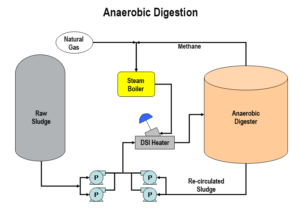
- Hydrogen sulfide (H₂S) is produced during anaerobic digestion when sulfur-containing compounds are broken down by sulfate-reducing bacteria (SRB).
- Both mesophilic and thermophilic digestion influence H₂S generation, but neither process alone is sufficient to remove H₂S to Bio-CNG quality. Additional desulfurization is almost always required.
Comparison Table
| Parameter | Mesophilic Digestion | Thermophilic Digestion |
|---|---|---|
| Operating Temperature | 35–40°C | 50–60°C (typically 55°C) |
| Retention Time | 20–30 days | 12–20 days |
| Biogas Yield | High | 5–15% higher |
| Methane Content | 55–65% | 58–68% |
| Typical H₂S Production | Moderate | Higher in many feedstocks |
| Sulfate-Reducing Bacteria Activity | Moderate | Higher due to faster degradation |
| H₂S Concentration | 500–3,000 ppm | 1,000–6,000 ppm (feedstock dependent) |
| Organic Matter Degradation | Good | Excellent |
| Pathogen Destruction | Moderate | Excellent |
| Process Stability | Very stable | More sensitive to disturbances |
| Energy Requirement | Low | High |
| Heating Requirement | Low | High |
| Capital Cost | Lower | Higher |
| Operating Cost | Lower | Higher |
| Suitable Plant Size | Small to large | Medium to very large |
| Recommended for Bio-CNG | Yes | Yes (if waste heat is available) |
H₂S Formation Mechanism
Sulfur compounds in the feedstock are converted into H₂S by sulfate-reducing bacteria:
- Organic sulfur → H₂S
- Sulfates → H₂S
In thermophilic digesters:
- Organic degradation is faster.
- Sulfur compounds are released more rapidly.
- H₂S production can therefore be higher.
Typical H₂S Concentrations by Feedstock
| Feedstock | Mesophilic (ppm) | Thermophilic (ppm) |
|---|---|---|
| Cow dung | 500–2,000 | 800–2,500 |
| Food waste | 1,000–3,000 | 2,000–5,000 |
| Press mud | 2,000–5,000 | 3,000–7,000 |
| Distillery spent wash | 2,000–6,000 | 3,000–8,000 |
| Poultry waste | 3,000–8,000 | 4,000–10,000 |
Actual values vary with feedstock composition, sulfur content, loading rate, and operating conditions.
Effect on Bio-CNG Plant Design
| Aspect | Mesophilic | Thermophilic |
|---|---|---|
| Digester Heating | Lower | Higher |
| Gas Cleaning Requirement | Moderate | Higher |
| H₂S Scrubber Size | Smaller | Larger |
| Iron Oxide Consumption | Lower | Higher |
| Activated Carbon Consumption | Lower | Higher |
| Biological Desulfurization | Effective | Effective but may need higher capacity |
Which Process is Better?
Mesophilic Digestion
Advantages
- Lower energy consumption
- More stable microbial community
- Lower H₂S production in many cases
- Lower operating costs
- Easier process control
Limitations
- Longer hydraulic retention time
- Slightly lower gas productivity
Thermophilic Digestion
Advantages
- Higher biogas production rate
- Faster digestion
- Better pathogen destruction
- Smaller digester volume for the same throughput
Limitations
- Higher heating demand
- Greater sensitivity to temperature fluctuations
- Often produces higher H₂S concentrations
- Increased gas-cleaning requirements
Best H₂S Control Strategy
Regardless of whether the digester is mesophilic or thermophilic, H₂S is best managed through a combination of measures:
- Reduce H₂S formation inside the digester
- Ferric chloride (FeCl₃) dosing
- Controlled micro-aeration (small oxygen injection)
- Primary H₂S removal
- Biological desulfurization using sulfur-oxidizing bacteria
- Final polishing
- Iron oxide media or impregnated activated carbon before CO₂ removal, compression, or filling
Recommendation for Bio-CNG Plants
| Plant Type | Recommended Digestion | H₂S Control Strategy |
|---|---|---|
| Small farm (<200 Nm³/h) | Mesophilic | FeCl₃ + Iron oxide filter |
| Medium (200–1,000 Nm³/h) | Mesophilic | Biological desulfurization + Iron oxide polishing |
| Large commercial (>1,000 Nm³/h) | Mesophilic or Thermophilic (if waste heat is available) | Biological desulfurization + Iron oxide + Activated carbon polishing |
Conclusion
- Mesophilic digestion (35–40°C) is generally preferred for most Bio-CNG plants because it offers greater process stability, lower energy consumption, and often lower H₂S production.
- Thermophilic digestion (50–60°C) is attractive for high-throughput facilities where waste heat is available and faster digestion is valuable, but it typically requires more robust H₂S control due to higher sulfur release rates.
- In either case, external H₂S removal systems remain essential to achieve the low H₂S levels (typically <5–10 ppm) required for Bio-CNG upgrading, compression, and vehicle fuel applications.
