Introduction
- In the face of rising environmental challenges such as climate change, soil degradation, and inefficient biomass waste management, biochar has emerged as a powerful and sustainable solution.
- Particularly in countries like India, where agricultural and forestry residues such as bamboo and babul (Acacia) are abundantly available, biochar offers a pathway to convert waste into wealth.
- This blog explores what biochar is, its properties, future scope, and detailed methods of producing biochar from different biomass sources like bamboo and babul.
What is Biochar?
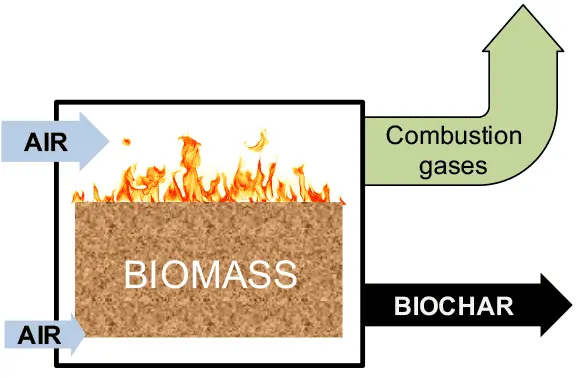
- Biochar is a stable, carbon-rich material produced when organic biomass is heated in a limited or zero-oxygen environment, a process known as pyrolysis. Unlike complete combustion, which converts biomass into ash and gases, pyrolysis preserves a large fraction of carbon in solid form.
- This carbon structure is highly resistant to decomposition, allowing biochar to remain in soil for hundreds to thousands of years.
- Because of this stability, biochar is considered an effective tool for carbon sequestration. This is called as Carbonization Process for Biomass used in rural areas
- Refer Which Biomass is the Best for Hotels and Cooking
Key Properties of Biochar
The unique properties of biochar make it valuable across multiple applications:
1. High Carbon Content
Biochar typically contains 70–90% carbon, depending on feedstock and production conditions.
2. Porous Structure
It has a sponge-like structure with micro and macro pores, providing:
- Large surface area
- Habitat for soil microbes
3. High Adsorption Capacity
Biochar can retain:
- Water
- Nutrients (N, P, K)
- Pollutants and heavy metals
4. Chemical Stability
It is resistant to microbial degradation, making it long-lasting in soil.
Benefits of Biochar
1. Soil Fertility Improvement
- Enhances nutrient retention
- Improves soil aeration
- Promotes beneficial microbial growth
2. Water Retention
Particularly beneficial for sandy soils and drought-prone regions.
3. Climate Change Mitigation
Biochar locks atmospheric carbon into a stable form, reducing greenhouse gases.
4. Waste Management
Utilizes agricultural and forestry residues that are otherwise burned or discarded.
5. Pollution Control
Biochar can be used in:
- Wastewater treatment
- Air filtration systems
Biomass Sources for Biochar Production
Biochar can be produced from a wide range of biomass:
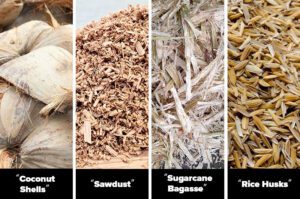
- Agricultural residues: rice husk, wheat straw, bagasse
- Forestry residues: wood chips, sawdust
- Energy crops: bamboo
- Dryland trees: babul (Acacia)
- Animal waste: manure
Among these, bamboo and babul are particularly important in India due to their availability, fast growth, and high carbon content.
Biochar from Bamboo
Why Bamboo?
Bamboo is one of the fastest-growing plants and has excellent properties for biochar production:
- High lignin content → produces stable biochar
- Low ash content
- High fixed carbon yield
Characteristics of Bamboo Biochar
- Highly porous
- High surface area
- Suitable for soil amendment and filtration
Methods of Producing Bamboo Biochar
1. Traditional Kiln Method
- Bamboo pieces are cut and dried
- Placed in a pit or kiln
- Covered to limit oxygen
- Slow burning produces char
Pros:
- Low cost
- Simple technology
Cons:
- Low efficiency
- Emission issues
2. Drum Carbonization Method
- Bamboo loaded into a metal drum
- Air holes controlled for partial combustion
- Pyrolysis occurs internally
Pros:
- Portable
- Better yield than pit method
Cons:
- Limited capacity
3. Advanced Pyrolysis Reactor
- Bamboo heated at 400–700°C
- Controlled environment
- Produces biochar, bio-oil, and syngas
Pros:
- High-quality biochar
- Energy recovery possible
Cons:
- Higher investment
Biochar from Babul (Acacia)
Why Babul?
Babul is a hardy tree widely found in dry regions of India. It is commonly used for fuelwood and charcoal.
Characteristics of Babul Biochar
- Dense and high fixed carbon
- Lower porosity compared to bamboo
- Excellent for long-term carbon storage
Methods of Producing Babul Biochar
1. Earth Pit Method
- Babul wood stacked in a pit
- Covered with soil
- Limited air supply ensures carbonization
Pros:
- Very low cost
- Suitable for rural areas
Cons:
- Poor control over quality
- High smoke emissions
2. Traditional Charcoal Kiln
- Babul wood arranged in a dome-shaped kiln
- Controlled airflow
- Slow carbonization
Pros:
- Better control than pit method
- Widely practiced
Cons:
- Moderate efficiency
3. Retort Kiln Method
- Babul wood heated in a sealed chamber
- Volatile gases reused as fuel
Pros:
- High efficiency
- Low emissions
- Improved yield
Cons:
- Moderate capital cost
4. Gasification-Based Method
- Partial combustion of babul wood
- Produces syngas and biochar
Pros:
- Energy + biochar production
- Suitable for industrial applications
Cons:
- Lower biochar yield
Key Parameters Affecting Biochar Quality
1. Temperature
- Low temperature (300–400°C) → more volatile matter
- High temperature (500–700°C) → more stable carbon
2. Heating Rate
- Slow heating → higher biochar yield
- Fast heating → more bio-oil
3. Residence Time
Longer time increases carbon stability.
4. Moisture Content
Dry biomass improves efficiency and quality.
Future Scope of Biochar
1. Carbon Sequestration & Carbon Credits
Biochar is gaining global recognition as a negative emission technology. It can play a key role in carbon trading and climate policies.
2. Sustainable Agriculture
- Reduces fertilizer requirement
- Enhances crop yield
- Improves degraded soils
3. Rural Development in India
- Utilization of bamboo and babul biomass
- Employment generation
- Decentralized energy systems
4. Industrial Applications
- Activated carbon substitute
- Water purification
- Construction materials (biochar concrete)
5. Integration with Energy Systems
Biochar production can be integrated with:
- Biomass gasifiers
- Industrial furnaces
- CHP (Combined Heat and Power) systems
Challenges in Biochar Adoption
- Lack of awareness among farmers
- Initial setup cost for advanced systems
- Absence of standard quality guidelines
- Need for region-specific research
Composition of Biochar
- Here’s a clear comparison of the typical composition of biochar from different biomass sources (values vary depending on temperature and process, but ranges are representative):
| Biomass Type | Heating Value (MJ/kg) | Fixed Carbon (%) | Volatile Matter (%) | Ash Content (%) | Moisture (%) | pH Range | Key Characteristics |
|---|---|---|---|---|---|---|---|
| Bamboo | 28 – 32 | 70 – 85 | 10 – 20 | 2 – 5 | 3 – 6 | 7.5 – 9.5 | High porosity, low ash, good for soil & adsorption |
| Babul (Acacia) | 30 – 34 | 75 – 90 | 5 – 15 | 3 – 8 | 2 – 5 | 7 – 9 | Dense carbon, high stability, excellent fuel char |
| Rice Husk | 14 – 20 | 50 – 65 | 15 – 25 | 15 – 30 | 5 – 10 | 8 – 10 | High silica ash, lower energy value |
| Bagasse | 20 – 26 | 60 – 75 | 15 – 25 | 5 – 10 | 4 – 8 | 7 – 9 | Moderate energy, good agricultural use |
| Wood Chips | 28 – 33 | 70 – 85 | 10 – 20 | 1 – 5 | 3 – 6 | 7 – 9 | Balanced properties, widely used |
| Coconut Shell | 30 – 35 | 75 – 90 | 5 – 15 | 2 – 5 | 2 – 5 | 7 – 8.5 | Very high density, excellent for activated carbon |
| Sawdust | 24 – 30 | 65 – 80 | 10 – 25 | 1 – 5 | 5 – 10 | 6.5 – 8 | Fine structure, good soil amendment |
| Animal Manure | 10 – 18 | 40 – 60 | 15 – 30 | 20 – 50 | 5 – 15 | 8 – 10 | High ash & nutrients, low fuel value |
Opportunities for Engineers and Researchers
For professionals in CFD, thermal engineering, and combustion systems, biochar offers exciting opportunities:
- Design of efficient pyrolysis reactors
- Optimization of heat transfer and airflow
- Emission reduction modeling
- Scale-up of biomass conversion systems
Conclusion
Biochar represents a multi-dimensional solution addressing climate change, soil health, and biomass utilization. With abundant resources like bamboo and babul in India, there is immense potential to develop decentralized biochar production systems that benefit both the environment and rural economy.
Adopting improved production technologies and integrating engineering approaches can further enhance efficiency and scalability. As awareness grows and policies evolve, biochar is poised to become a key component of sustainable development and circular economy systems.
Final Insight
Transforming bamboo and babul biomass into biochar is more than a technological process—it is a sustainable pathway that connects agriculture, energy, and environmental stewardship for a greener future.
